Lightroom.com
Why a strong product site wasn't converting, and the redesign that came out of the diagnosis.
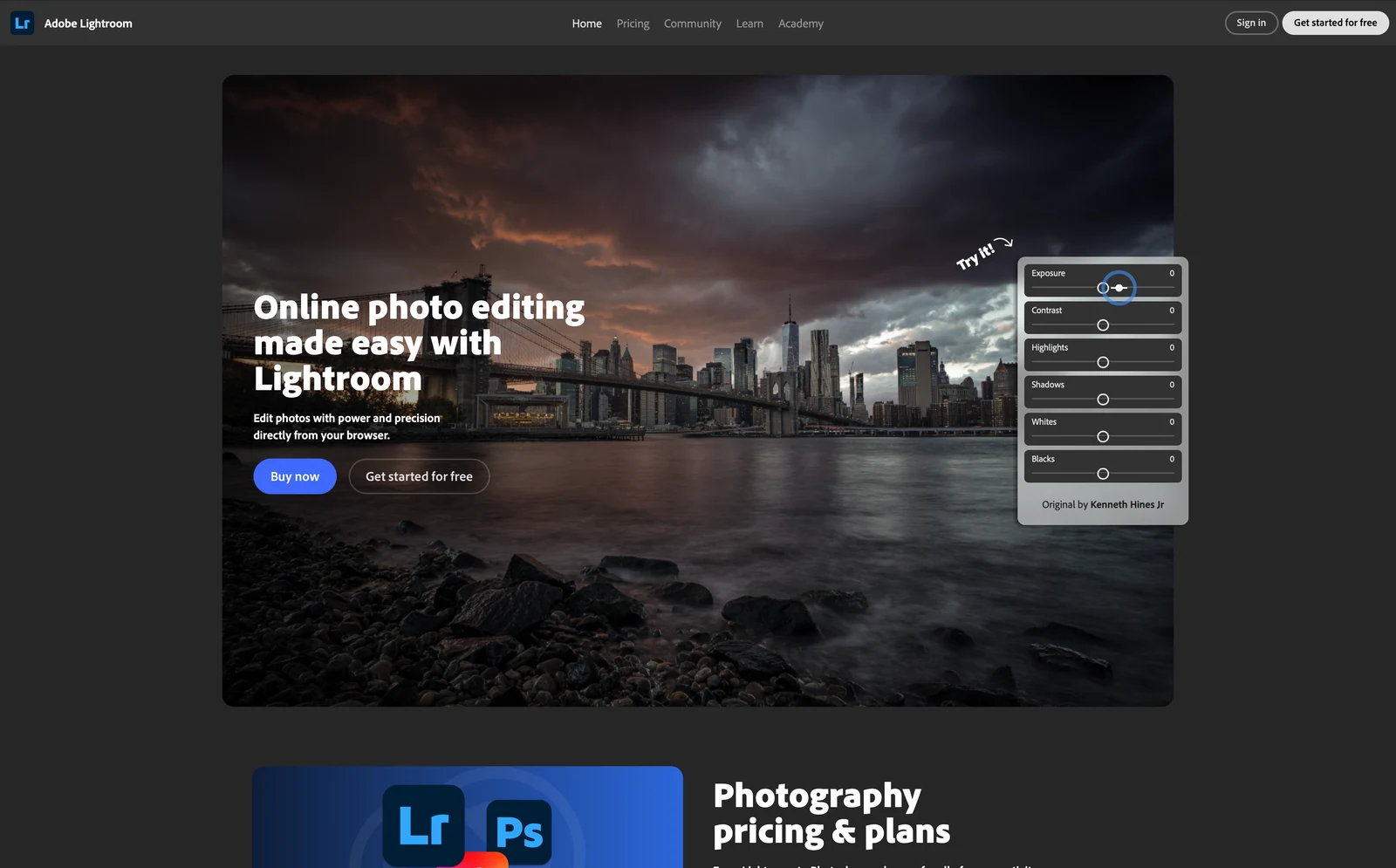
In 2023, Adobe brought BUILT a conversion problem: Lightroom.com wasn't turning enough visitors into trial users or community members.
The usual excuses weren't available. Lightroom had brand recognition, a serious creative product, and a community photographers had reason to care about. When a site has all of that and still underperforms, the tempting answer is to treat it as a page problem: move the button, sharpen the headline, shorten the page. I've watched that answer fail enough times to be wary of it.
I started by looking at what the site needed visitors to understand before asking them to act. A page is an argument before it is a layout, and an argument can be sound in every individual claim while still falling apart because the claims arrive in the wrong order.
My job was to find where Lightroom.com lost that thread, make the diagnosis specific enough for a team to design against, and define the flow for the next version of the site. I led the heuristic analysis, evaluated competitors against the same criteria, presented the findings to Adobe, and helped define the conversion path that shaped the redesign. My part ran from diagnosis through the first phase of design, after which our designer carried the work forward with Adobe's internal team, who built the version that shipped.
02
Giving the problem a structure
I started with a heuristic walkthrough of the site, because the first job was to get the diagnosis out of taste. Taste is arguable. Repeated friction on the path to the same action is harder to hand-wave.
I went moment by moment through the parts of the experience most likely to decide whether someone converted: first impression, value clarity, navigation, product comprehension, trust, community motivation, trial motivation, and next-step clarity. At each point I asked the same questions. What does the visitor need to understand here, what is the site asking them to do, and has it earned that ask. The gap between what a screen asked for and what it had earned was usually where the trouble lived.
Then I evaluated several competitors against the same criteria. I wasn't looking for patterns to copy. I wanted a baseline that made the gaps defensible, places where competing experiences created clarity faster, reduced ambiguity sooner, or made the next action more obvious.
03
What the audit found
The audit turned up a pattern rather than a single broken page. Lightroom.com carried real value end to end, and it kept handing the visitor the work of assembling that value. Many of the pieces were reasonable on their own; the order and the emphasis were what cost the site.
The clearest case was the community. Lightroom's community is one of the best arguments for the product, a place where photographers share their work, find other people's, and build on it. On the site it read like a separate destination, something to come back to later, rather than proof of why Lightroom was worth using. A visitor met it as a parallel attraction competing for attention, when it could have been the evidence that closed the case. The material was right. Its place in the argument was working against it.
The stronger competitor experiences were more willing to decide. They put their value in front of you sooner, kept the main action unambiguous, and left less room to wonder what came next. The fix for Lightroom.com was order and emphasis. It could keep everything that made it good and still convert better.
04
From the diagnosis to a flow
From there I worked with a colleague to define the flow the next version should follow. The flow gave the redesign team a spine: what to explain first, what to prove next, and where to ask for the action. Each section had a reason to exist and a reason to sit where it did, so a visitor was moved toward the decision instead of left to wander toward it.
05
What shipped
The next risk was handoff. Strategy gets weaker when the reasoning behind it turns into a task list for people who weren't in the room. As a co-owner of BUILT, I treated that transition as part of the work. I oversaw the first phase of design, working between our designer and Adobe's internal team so the rationale stayed attached to the screens. By the time I rolled off, the reasoning was visible in the design itself, not trapped in meeting notes.
BUILT designed the redesigned Lightroom.com experience on that foundation, and Adobe's internal team built the version that shipped. The homepage carried the priorities the work had defined: value established earlier, a shorter path from interest to signup, and the community moved from a parallel destination into the product's story, the fix the audit had pointed to. I didn't draw the final screens. The sequence underneath them came from this work.
06
What this was, underneath the audit
Take away the Adobe logo and the Lightroom brand, and this is a problem I run into constantly. A strong offering underperforms because the experience makes people do the interpretive work themselves. The product is good, the brand is trusted, the audience has a reason to care, and the path is muddy enough that the visitor has to build the case on their own. I've come to think the work in that situation is mostly sequencing: deciding what someone has to understand first, what would make them believe it, and which action only makes sense once both are in place. On Lightroom.com, that meant turning a broad worry about conversion into a specific, ordered set of problems a team could design against, and a site that made the next step make sense.
More work
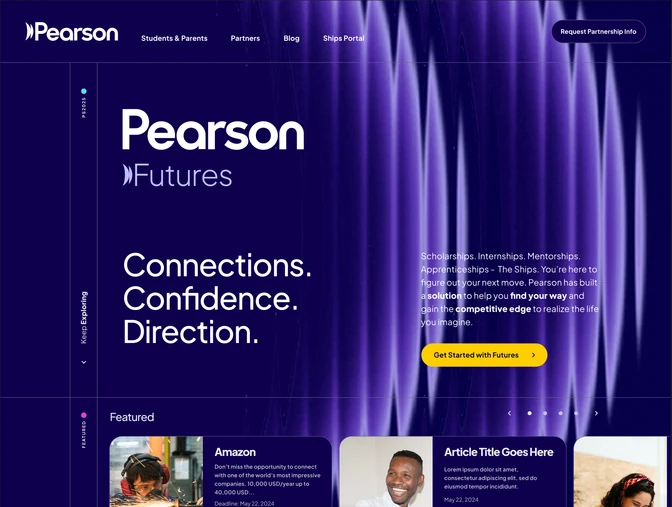
Pearson Futures Helping Pearson turn student uncertainty into a platform students could use, partners could join, and the company could keep building.
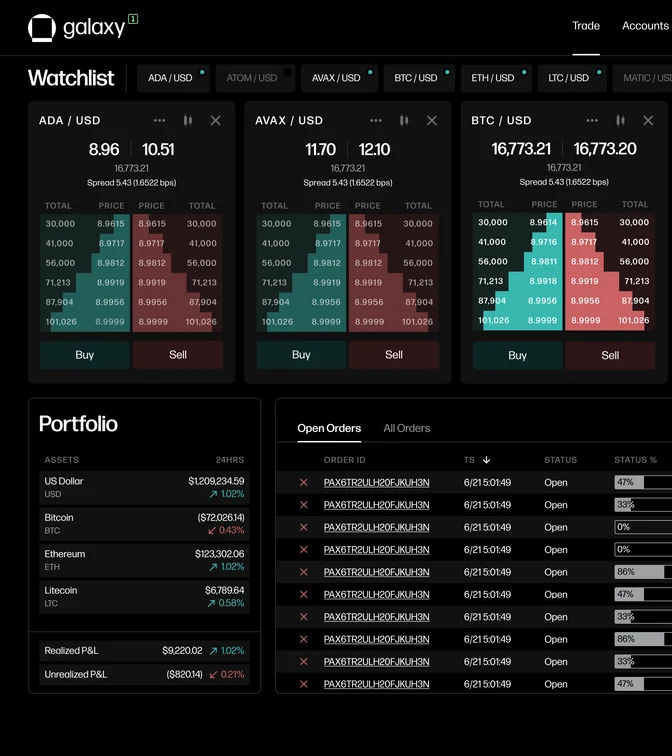
Galaxy G1 Trading Interface Designing a dense institutional trading interface without hiding the work traders need to do.
If you're working on something with this shape, see how I work with teams or email me at drew@drewlittrell.com.